Reviewing the Psychology Mental Problem, Stress, Brain Design
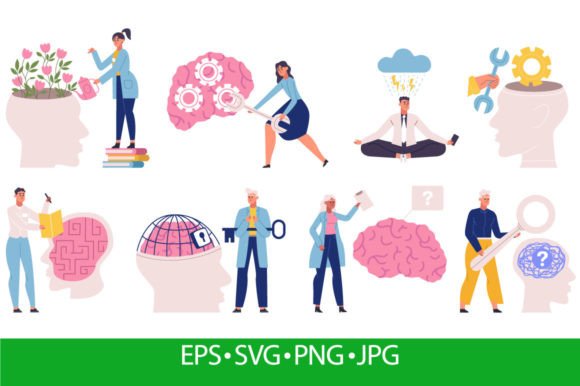
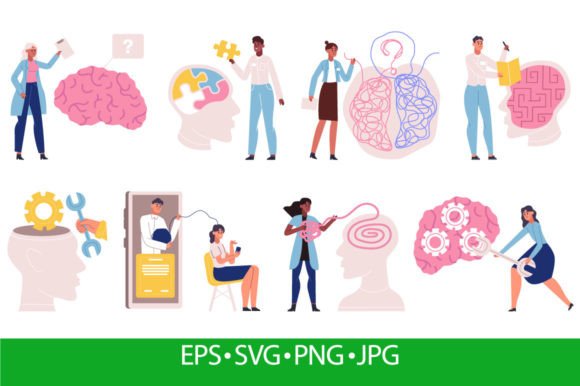
As a designer who spends more time staring at stitch simulations than most people care to admit, I approach new design assets with a mix of curiosity and skepticism. When I first opened the Psychology Mental Problem, Stress, Brain illustration set, my immediate reaction wasn't just about the aesthetic; it was about applicability. In the world of mental health awareness, the line between poignant and clinical is thin. This collection, described as a medical therapy and mental health vector illustration set featuring psychology doctors and emotional disorder support, offers a visual language that is increasingly in demand. However, translating a digital Graphics file into a tangible handmade product requires a different kind of scrutiny.
First Impressions and Visual Personality
The mood created by the Psychology Mental Problem, Stress, Brain files is serious yet supportive. Unlike some overly cartoonish medical clipart that can feel dismissive of genuine struggle, these illustrations carry a weight that feels appropriate for therapy contexts. The layout typically centers on the brain or the interaction between doctor and patient, which provides a strong focal point. For an embroidery project, this centralization is crucial. It means the design has a natural anchor, making it easier to hoop without losing the narrative of the image.
Visually, the personality of these Illustrations leans towards modern minimalism. This is a significant advantage for us as makers. Complex gradients and tiny details that look crisp on a screen often turn into a muddy mess under the needle. The clean lines found in this set suggest that, if digitized correctly or used as a base for a custom machine embroidery design, they could translate well into satin stitches and fill stitches without excessive puckering. The theme of "supporting patient" implies a need for clarity, and the visual simplicity supports that goal.
Real-World Application: The Awareness Tote
To truly test the viability of this design, I imagined a specific real-life scenario: creating a limited run of tote bags for a local counseling center's annual wellness fair. The client wanted something that signaled "safe space" without being overly medical. The Psychology Mental Problem, Stress, Brain motif fit this brief perfectly. I envisioned placing the graphic on the lower corner of a heavy canvas tote, using a tote bag design approach that balances negative space with the imagery.
In this context, the design acts as a conversation starter. A customer picking up the bag isn't just buying merchandise; they are engaging with a message about emotional disorder support. If I were an Etsy seller specializing in mental health advocacy gear, this graphic would be a cornerstone of my shop. It works exceptionally well for custom apparel like sweatshirts, where a larger chest print can utilize the full detail of the vector set. The sweatshirt embroidery potential is high because the thicker fabric can support the density required to render the brain textures or the doctor figures clearly.
Navigating Fabric and Stitch Challenges
However, enthusiasm must be tempered with technical reality. Not every surface is ready for this level of detail. If you are planning to use this on a baby embroidery project, such as a onesie or a soft blanket, you must proceed with caution. The concept of "stress" and "mental problems" might be visually heavy, but technically, the stitch density is the real concern. Thin, stretchy fabrics require a lighter touch. You would likely need to simplify the digital embroidery file significantly, perhaps converting complex fill areas into running stitches or open fills to prevent the fabric from warping.
Similarly, curved surfaces like caps present a challenge. The intricate nature of a brain illustration or a detailed doctor-patient scene can distort easily on a structured front panel. If you attempt a cap project, ensure your hoop size is adequate and that you are using a stiff stabilizer to maintain the integrity of the lines. Dark fabrics also require a strategic approach to thread colors. Since these designs often rely on contrast to convey the medical or psychological theme, stitching light threads over dark navy or black fleece requires a careful underlay strategy to prevent the background from showing through and dulling the image.
Commercial Value and Brand Consistency
For small business owners and creative entrepreneurs, the value of a design lies in its ability to build trust. Using the Psychology Mental Problem, Stress, Brain graphics in your small shop product lineup signals professionalism. It shows that you understand the gravity of the subject matter. Whether you are creating an embroidered patch for a therapist's office or a holiday gift for a healthcare worker, the quality of the final stitch reflects on your brand. A sloppy execution of a mental health theme can feel disrespectful; a crisp, well-executed finished product fosters buyer engagement and recognition.
This design set also holds potential beyond physical goods. As a printable mockup element, it allows you to showcase your embroidery services to potential corporate clients in the healthcare sector. You can demonstrate how their logo or mission statement could integrate with these thematic elements. For commercial embroidery projects, consistency is key. If you are producing fifty aprons for a clinic, the repeatability of the design ensures that every item looks identical, reinforcing the clinic's brand identity.
Practical Notes for the Embroiderer
Before you commit to stitching this on a client's garment, there are several practical steps you must take. First, always test the design on scrap fabric that matches the weight and texture of your final material. Fabric texture plays a massive role in how the "brain" details or fine lines of the doctor figure will appear. What looks smooth on cotton might sink into a towel or pucker on a windbreaker.
- Check Thread Contrast: Ensure your chosen thread palette creates enough separation between the different elements of the illustration, especially if the design relies on subtle shading.
- Review Stitch Density: If you are digitizing this yourself from the SVG or JPG source, be mindful of overlap. Too many layers of fill stitch can make the design stiff and uncomfortable to wear.
- Inspect Small Details: Zoom in on your simulation. Tiny text or minute facial features in the doctor illustration might need to be removed or enlarged to survive the stitching process.
- Verify Licensing: This is critical. The product description mentions "Jpg, png, svg," which are typically vector or raster graphics, not necessarily native embroidery files. You must confirm the license terms before selling finished items. Does the license allow for commercial use on physical goods? Can you modify the vectors for digitization?
Finally, consider the washing instructions you will provide to your customers. Designs with high detail and multiple color changes, common in medical illustrations, can be sensitive to frequent agitation. Advising clients to wash inside out or air dry can extend the life of your holiday embroidery or personalized gifts.
In conclusion, the Psychology Mental Problem, Stress, Brain collection is a potent tool for the modern maker. It bridges the gap between clinical necessity and human empathy. Whether you are an Etsy seller looking to expand your catalog or a hobbyist making a meaningful gift, this design offers a solid foundation. Just remember that the transition from screen to stitch requires respect for the medium. With the right stabilizer, thoughtful digitization, and careful fabric selection, these graphics can become powerful, tactile symbols of support and healing.