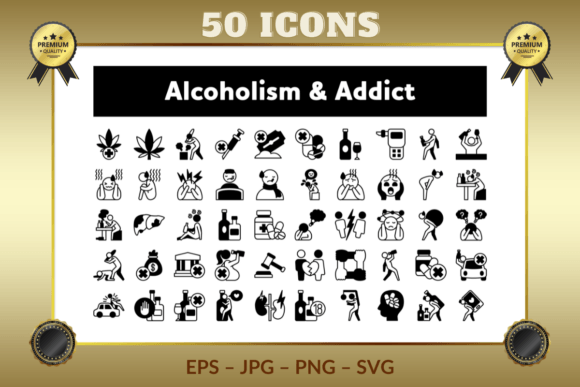
Review: Alcoholism Addict Half Glyph Icons for Embroidery
As a designer who spends more time staring at stitch simulations than I do sleeping, I approach new design assets with a healthy dose of skepticism. We have all downloaded a file that looked crisp on the screen but turned into a bird's nest of thread on the fabric. That is why I took a close look at the Alcoholism Addict Half Glyph Icons collection before committing to a client project. This isn't just about downloading a graphic; it is about understanding how these vectors translate into tangible, stitched reality for an embroidery project that needs to hold up under scrutiny.
The first thing that strikes you about this set is the mood. These aren't fluffy, decorative flourishes. They are stark, communicative, and carry a heavy emotional weight. The "half glyph" style suggests a modern, minimalist aesthetic that relies on negative space and strong lines rather than dense fills. For a professional looking to create meaningful handmade products, this visual personality is gold. It speaks to awareness, recovery, and solidarity without being overly ornate. When I loaded the files into my digitizing software to inspect the layers, the scalability mentioned in the description held true. Because they are fully layered vector files, the potential for resizing without losing quality is there, provided your machine and hoop can handle the dimensions you choose.
Real-World Application: The Recovery Tote Bag
To truly test the viability of these Icons, I imagined a specific real-life scenario that many of us face: a custom order for a local support group. The client wanted durable, washable tote bag designs for a fundraising event focused on addiction awareness. They needed something that looked professional but wasn't so intricate that it would drive up production costs or fail on canvas fabric.
In this context, the Alcoholism Addict Half Glyph Icons shine. I selected a few specific symbols from the set, such as the "No Heroin" and "No Cocaine" prohibitory styles, alongside the medical marijuana icons to represent the broader spectrum of substance discussion. On a heavy-duty canvas tote, these designs would likely perform best as a satin stitch outline or a light fill stitch, depending on the final digitization. The clean lines of the half-glyph style mean less thread buildup, which is crucial for bags that will be stuffed with books and groceries. A customer receiving this personalized gift or merchandise would immediately grasp the message. There is no confusion in the imagery, which builds instant trust and brand consistency for the organization commissioning the work.
However, moving beyond the tote bag, I also see these working exceptionally well on sweatshirt embroidery. Imagine a modest, chest-left placement on a high-quality hoodie. The starkness of the icon against a heather grey or navy fleece creates a powerful statement piece. It transforms a standard garment into a conversation starter about mental health and recovery. For an Etsy seller or small shop owner, this versatility is key. You aren't just selling a shirt; you are selling a symbol of strength.
Navigating Technical Challenges and Fabric Choices
While the artistic merit is clear, we must talk about the technical execution. Every machine embroidery design has its kryptonite, and for icon-heavy sets like this, it is often the scale and the fabric texture. If you are planning to use these on a curved surface like a cap, proceed with caution. The flat geometry of a glyph can distort easily on the front panel of a baseball cap if the stabilizer isn't robust enough. I always recommend using a cut-away stabilizer for structured garments to prevent the design from sinking into the fabric over time.
Another critical consideration is the fabric texture. These icons rely on clarity. If you attempt to stitch them on a highly textured towel or a looped terrycloth without proper underlay, the fine details of the "half" aspect might get lost. The stitch density needs to be managed carefully. Since the product description highlights that these are editable and scalable, you have the freedom to adjust the density. For dark fabrics, ensure your thread colors offer high contrast. A white or silver thread on a black background works well for the prohibitory signs, but for the more nuanced medical icons, you might need to test different shades to ensure the shape remains distinct.
Small hoop sizes present another hurdle. If you are aiming for a tiny embroidered patch or a subtle detail on baby clothes, verify the minimum viable size. While vectors are infinitely scalable, embroidery machines have physical limits. A design that looks sharp at four inches might become a blob at one inch if the original digitizing doesn't account for thread thickness. Always run a test stitch-out on scrap fabric that matches your final material. This is non-negotiable for maintaining professionalism in your craft business.
Enhancing Value and Customer Engagement
From a business perspective, the Alcoholism Addict Half Glyph Icons offer a unique opportunity to elevate your product line. In a market saturated with generic quotes and clipart, offering specialized, topic-specific imagery sets you apart. When a customer sees a well-executed icon related to their personal journey with addiction or recovery, the emotional connection drives engagement. It increases the perceived value of the finished product.
For those creating printable mockups or digital previews for their online stores, the clean lines of these graphics render beautifully. They look professional in photos, which helps click-through rates on social media. However, remember that what looks good on a screen must translate to thread. The transition from a digital embroidery file to a physical object is where your expertise comes in. By choosing high-quality threads and ensuring your tension is perfect, you turn a simple icon into a lasting keepsake.
It is also worth noting the sensitivity of the subject matter. Designs dealing with addiction, whether it involves alcohol, heroin, or cannabis, require a respectful presentation. Sloppy stitching or poor color choices can trivialize the message. These icons demand precision. The "aggressive" or "brutal" elements mentioned in the tags should be handled with care to ensure they convey strength rather than hostility, depending on your client's intent.
Final Verdict and Designer Notes
After evaluating the Alcoholism Addict Half Glyph Icons, my conclusion is that they are a potent tool for the right projects. They are not universal decor; they are purposeful statements. For an appliqué design base or a standalone satin stitch motif, they offer a modern edge that fits well with current trends in awareness apparel.
Before you integrate these into your workflow, here are my practical notes:
- Test First: Always stitch a sample on the exact fabric you plan to use. Check how the "half" elements hold up.
- Check Licensing: The description mentions commercial potential, but always confirm the specific license terms before selling finished items or digital derivatives.
- Stabilizer Matters: Match your stabilizer to the fabric weight. Heavy icons need heavy support.
- Thread Contrast: Play with monochromatic schemes for a subtle look or high-contrast colors for bold visibility.
- Inspect Details: Zoom in on the vector paths. Ensure there are no stray nodes that could cause machine hesitation.
In the hands of a skilled operator, these Graphics can transform a simple piece of custom apparel into a meaningful artifact. They bridge the gap between digital convenience and the tactile warmth of handmade goods. Whether you are making a holiday embroidery gift for a friend in recovery or stocking your boutique with awareness gear, this collection provides the raw material for impactful storytelling through thread.