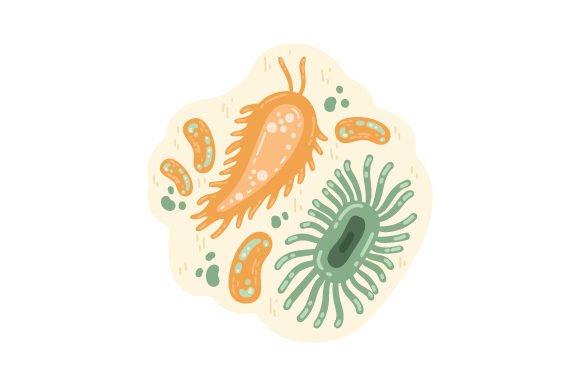
Germs and Viruses: Medical Crafts for Blog Design
As a digital publisher who has spent years refining the visual identity of multiple content sites, I approach every new graphic design asset with a critical eye. It is not enough for an image to simply exist; it must perform. When I first opened the files for Germs and Viruses, my immediate thought was about its potential utility in the current content landscape. We are living in an era where health literacy is paramount, yet the visual language surrounding medical topics often oscillates between sterile corporate stock photography and overly cartoonish illustrations. This collection strikes a necessary balance, offering a versatile toolkit for creators in the Medical and Crafts niches who need to communicate serious information without losing reader engagement.
First Impressions and Editorial Mood
The initial impression of Germs and Viruses is one of clarity and modern simplicity. The lines are clean, avoiding the clutter that often plagues complex scientific diagrams. This aesthetic creates an editorial mood that is educational yet approachable. It does not feel alarmist; instead, it feels informative. For a blog designer, this is crucial. If you are running a site focused on wellness, parenting, or public health, your visuals must instill trust immediately. These designs support that goal by looking professional enough for a doctor's office but stylized enough for a lifestyle blog. They naturally support content that needs to be authoritative yet accessible, bridging the gap between clinical accuracy and consumer-friendly creative design.
Integrating Assets into Real Publishing Workflows
In my own workflow, a single design asset rarely serves just one purpose. The true value of Germs and Viruses lies in its adaptability across various publishing formats. Imagine preparing a comprehensive guide on seasonal immunity. These graphics can serve as the foundation for high-performing Pinterest pins, where bold, recognizable shapes stop the scroll. Because the files include vector formats like SVG and EPS, scaling them for a massive website header or a tiny favicon retains perfect crispness.
Beyond standard blog posts, these assets are ideal for creating digital products. You could easily incorporate them into a digital guide or a printable checklist for parents managing flu season. They work exceptionally well as accents in a Canva template designed for health coaches to use in their own content marketing. Furthermore, for those of us building email lists, these images make excellent headers for newsletter graphics or cover art for a lead magnet PDF. The transparency of the PNG files means they can be overlaid on colored backgrounds without unsightly white boxes, allowing for seamless integration into diverse brand palettes.
Enhancing Content Performance and Visual Hierarchy
Why does the choice of imagery matter for metrics? Because visual hierarchy dictates how a reader consumes information. A strong graphic draws the eye to the headline, increasing the likelihood of a click-through. Germs and Viruses supports this by providing distinct focal points that do not compete with typography. When used as a featured image, it establishes a stronger first impression than generic text overlays. Consistency in using these design elements across your category pages improves brand identity, making your site instantly recognizable to returning visitors. This consistency builds reader trust, signaling that your content is curated and professional, which is essential for affiliate marketing pages where credibility directly influences conversion rates.
Strategic Placement and Usage Scenarios
To maximize the impact of this collection, placement is key. These assets shine brightest as hero images for long-form articles or as thumbnails for video content explaining biological concepts. They are also perfect for editorial accents within a post, breaking up walls of text and illustrating specific points about hygiene or virology. For social media, they act as powerful icons in carousel posts or story highlights. However, there are scenarios where caution is required. In very small mobile thumbnails, intricate details might get lost, so it is best to test the SVG or PNG at reduced sizes. Additionally, if your website relies on a strictly minimal visual system or caters to a hyper-corporate audience, the "craft" element of the design might feel too playful. In such cases, simplifying the color palette or using the line art in monochrome can help align the asset with a more serious tone.
Practical Notes for Publishers and Designers
Before deploying Germs and Viruses across your digital properties, there are several technical checks to perform. Always preview the asset on both desktop and mobile screens to ensure readability. Test the graphics against your primary headline fonts; they pair surprisingly well with both clean sans-serif fonts for a modern look and handwritten fonts for a softer, community-focused vibe. Check the contrast ratios if you plan to place white text over the images. From a performance standpoint, while SVGs are inherently lightweight, ensure your PNGs are compressed properly to maintain fast page load speeds, a critical factor for SEO.
Finally, and perhaps most importantly, verify the licensing terms. As a commercial publisher, you must confirm that the commercial license covers your specific use cases, especially if you are selling printable designs or using the images in paid advertising campaigns. Understanding the difference between personal use and commercial design rights is vital to protecting your business. When sourced from a reputable creative marketplace, these design assets offer a safe, high-quality solution for elevating your small business branding. Whether you are creating a digital download for teachers or a series of infographics for a health portal, Germs and Viruses provides the structural flexibility needed to produce polished, clickable, and trustworthy content.